Reverend Brenda S. Wills at Wesley UMC in Eugene OR
Sermon 2026.10.18
Wrestling with God, wrestling with words about God, I think I am a bit like Jacob whom OUR Pastor, Nicole, preached about in August.
- Remember Jacob whose name can be translated “grabby”. Jacob, who as a young man, stole/ grabbed a blessing from his older brother Hairy, (also called Esau).
- Now, much older, we met Grabby Jacob wrestling with a man all night, insisting that the wrestler now give Jacob a BLESSING before Jacob would let him go.
- The Wrestler, in fact blessed Jacob with a new name, Israel, a name which meant, “one who wrestles with God.” (Text is Genesis 32:22-30)
I recognized myself as a God wrestler when I heard that sermon.
- Like Jacob, I have a lifelong relationship with God, so when I offer you these thoughts today, I realized I should begin by confessing my faith in a living, incarnate (that is dwells in human beings) holy one that was revealed to us in the life and teachings of Jesus the Christ.
- As I have said before in a sermon, I trust God like I trust gravity. God is always present and no amount of questions or stubbornness on my part does anything to take away the pull of God on my center.
I will tell you, I wrestle with God about a lot of things and have since I was a little kid.
- As a kid in middle school, I wondered if I was a Christian, because my friends said I had to be baptized and join a church to be a Christian. But my dad said I was not old enough to join the Methodist church, even after Confirmation at Bible School where we learned the 10 commandments by heart. “Honor thy father and mother.”
- In HS in the late 1960’s, our youth group debated why we were at war in Viet Nam, when Jesus said, “Love your neighbor”. And that Commandment we had memorized a few years before, “Thou shall not kill.”
- When I arrived at Iliff School of Theology in Denver, in 1974, I was all in as a serious student, planning to be a United Methodist pastor, and hoping (secretly of course) to also be the wife of a United Methodist pastor. I was shocked to learn, in confrontations with other seminary students, that the Bible said I was not able to be a clergy because I was a woman.
I entered my first church 4 years later, with a passion for using inclusive language for human beings, and not surprising, I began to also use inclusive language for God. Ok, not inclusive language. Gender NEUTRAL language.
- In the 1980’s, as a woman pastor, I was too afraid to use out loud in church, any pronoun that was really inclusive. I could say, “Jesus described God as a housewife, who sweeps her house, and has a dance party after the lost coin was found.” But that was as close as I got to ever using a feminine pronoun for the Holy.
God and I wrestled but I was too afraid to speak about the mothering, birthing, feminine images of God that were deeply feeding my personal spiritual journey.
- I am so blessed here, in these church walls, to hear preachers remind us that God’s love is for all Her children; all HER children. God is tender and They are our creator.
- I wrestle with a good amount of guilt for the times I did not bring that news to the churches I served. It is one of the reasons my place of being a pastor shifted from local churches to being a hospital and hospice chaplain for the second 20 years of Ministry.
That chaplaincy work brought me to my God wrestling mat, because I needed to understand prayer in hard times. I needed an understanding of prayer that I could live out as I walked with people in the absolute worst moments of their lives.
Hard times had shown up in the local churches I served, so I had some wrestling exposure:
- The lay leader from a congregation was killed in a tractor accident.
- A congregation member who taught elementary school, called to say one of her students had just been killed, accidently, in a gun accident with a sibling.
- Cancer caused the death of a loving husband and left his wife and 2 preschool boys to navigate life without him.
- I remember stubbornly refusing to pray, early on, for the healing of a friend. If God was depending on MY PRAYER to heal her, I was not interested in that kind of God.
- This week, news of another school shooting, in nearby Bend. 5 people dead. Every student and staff member and volunteer in that school, changed forever. Every Parent. Every neighbor. Everyone.
I wrestle with how to pray for those places. What good is prayer? What happens when we pray? Lots of things I have heard faithful people say about prayer came to mind:
- If you just pray hard enough, God will give you what you asked for.
- God always answers prayer, sometimes the answer is yes, sometimes no.
- God has a reason, even if I don’t know what it is.
- God wanted my baby more than I did, so He took her home to heaven.
As a chaplain, my roll was to support people in whatever way they made sense of their live. My job was to listen, not change their understanding. I wanted to support each person’s way of holding their life together, and help them lean into whatever Spiritual support they had.
But for myself, I need a way to pray that allows me to trust a power greater than myself in whom I can continue to place my trust and my life.
25 years ago, I found a helpful guide in the work of Marjorie Hewitt Suchocki, who in 1996, wrote about prayer. I found just this week, remembering her words help me know how to pray in these days. So, in my wrestling with you about prayer, I am borrowing much of her work from her book, In God’s Presence
She offers several images for God. One is to imagine God as Water,
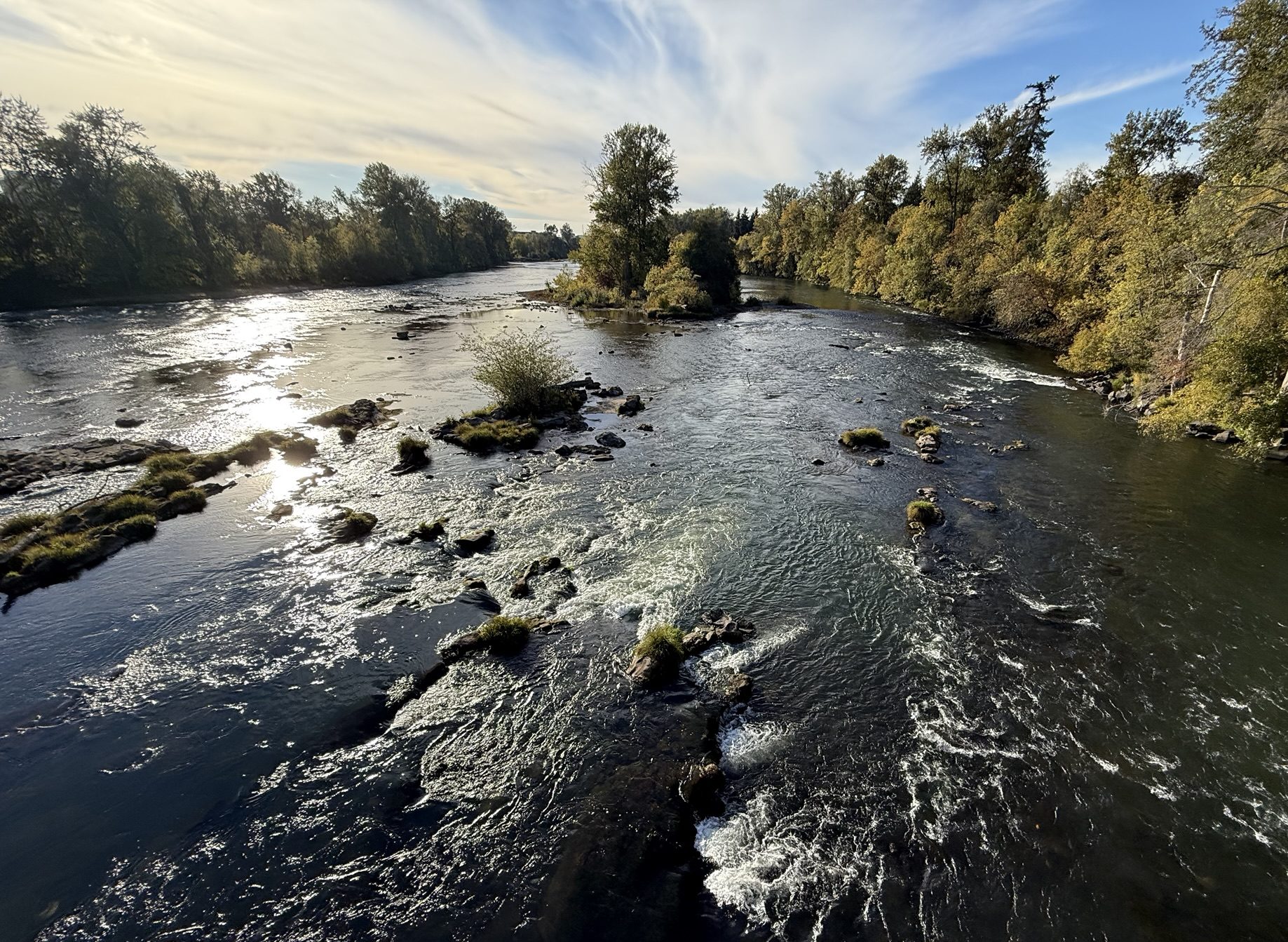
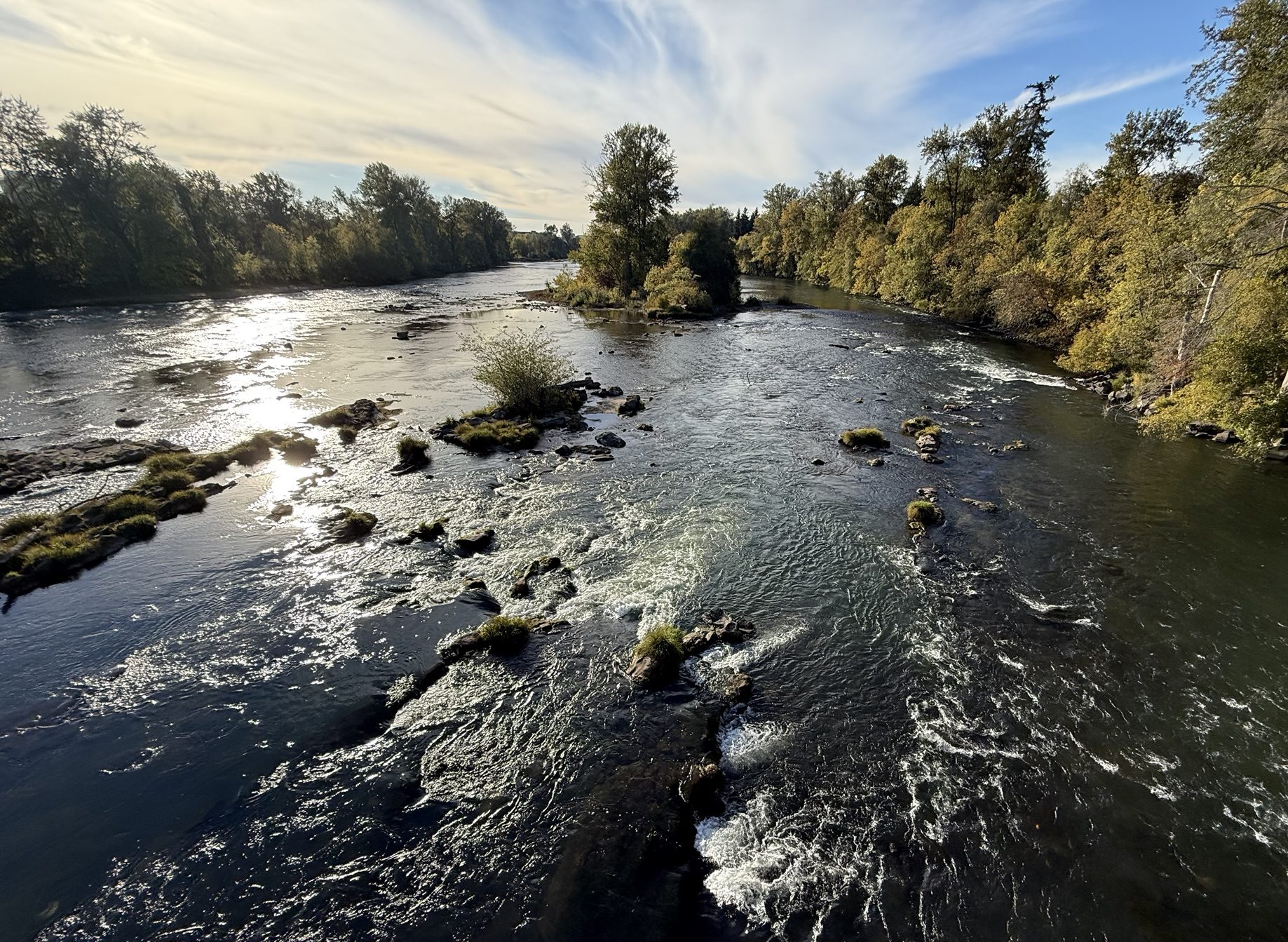
p. 4 / 5. Water (God) as an all-pervasive presence. That image of God as water washes over me and has quenched my thirst for decades. Water surrounds the rocks in the river; water is 60% of the human body – this human body; without water I am nothing, but at the same time, I am more than simply water.
Suchocki describes a few of the usual ways we pray and sketches out for us, the image of God our pray practice reveals.
She writes: P. 16…We think of a God who knows all things, can do all things, needs nothing. Yet we pray in ways that reverse the image of who has power. Our habits of prayer can make us the all-powerful one and God our servant.
…Sometimes we pray as if God is a great Genie in Aladdin’s bottle, and prayer is the magic rubbing that draws the genie forth to do our bidding. If we just pray (rub) hard enough, God will do as we ask…
….Sometimes we pray as if we are dictating our memo for the day to our divine secretary, who is then to do as we have asked.
…. Or the image of God as King, holding audience, as a King who knows the situation but refrains from asking until properly asked.
In case it isn’t clear, I will now say out loud, I couldn’t work for a God, or trust myself and those I love, to a God who is a Genie controlled by my prayer, nor do I want God to take down my dictation as God’s daily to-do list.
Suchocki introduced me to the idea that in Prayer,
“God works in the world as it is, in order to bring it to where it can be.” (repeat)
That let me pray again. That anchors me in believing God is. Period. God is in the trauma – not causing or “allowing” a car crash to teach us lessons. But God in the moment. With us. We are never alone. Not even in the worst of times. God present in the life of every person connected to Silver Rail Elementary School in Bend, Oregon. (Note to reader: on Thursday, Oct. 15, 2022, a 16 year-old shot their way into an elementary Special Ed classroom and shot three children and one teacher to death, shot and injured a teacher and another child. A passer-by saw the shooter enter the school, followed him, and killed the shooter using his handgun. All in about 15 minutes.)
“God works in the world as it is, in order to bring it to where it can be.”
As I chaplain, I usually asked people if they would like me to pray with them. If they wanted prayer, then my practice was to ask them two questions:
- What do you call God?
- What do you want God to do for you today ?
What do you call God?
- Sometimes a quick answer, solid and sure: Creator. Jesus. Father. God.
- Sometimes there was a long of pause, a look of wonder that I might honor whatever language they used for the Holy: Higher Power, Lover, Mother.
- Some seemed offended at the question, as though there were only one right answer to my question. “Father, they’d say. What else would you call God.”
And then I would ask, “What do you want (God – whatever you call them), What do you want (God) to do for you?” Often people would tell me, “God already knows what was best”. Or look at me like my asking was crazy. I asked them to remember the story of Blind whom Jesus asked, “What do you want me to do for you.?”
Let us imagine we are filming the scene. Picture it with me….
- These friends of Jesus walk with him, toward Jerusalem. We know what is ahead, butt the listening crowds and the disciples don’t yet know the end of the story.
- All those tired followers of Jesus know is that he had just thrown them another puzzle to chew on. “The Son of Man came not to be served, but to serve”
- They walk through the city gates into Jericho looking for some peace and quiet, and what do they find?
- A LOUD Blind Begger, yelling, “Hey Jesus, Son of David (he was, you remember, from Jerusalem, the city of David), “Hey Jesus, Son of David, have mercy on me.”
- Many – I am thinking the disciples especially – told that man to be quiet. Turning to him, ignoring his cries as they shuffle by in their sandles sayin to him,
- “SHUT UP,. Shut up, Shut up.”
- Imagine Jesus walking ahead, when he suddenly STOPS, puts the brakes on . Middle of the road. I see the disciples literally slamming into him like cars on a freeway. Full Stop. What is happening?
Jesus turns back toward Blind Bartimaus and says, “Call him here.”
- The disciples change their tune from “Shut up, shut up,” to
- “ No wait , Get up, get up, get up and over here. Jesus is asking for you.”
- The disciples guided the blind man to where Jesus waited.
- Jesus asked the one who could not see, “What do you want me to do for you?
- Blind Bartimaeus said, “Let me see again!”
- Jesus said, “Your faith has made you well.”
- And the unblind Bartimaeus, followed Jesus on the way… to Jerusalem, and all that followed.
Suchocki wrote about Prayer as relational. She says her book is about a RELATIONAL THEOLOGY OF PRAYER. Her words are more elaborate, but they are not all that different that the relational words of Jesus to Bartimaus: “What do you want me to do for you?”
- Jesus and Bartimaus – in a relationship
- You and God – are in a relationship
- That relational theology of prayer makes sense to me.
Suchocki writes (p.18-19):…
- Suppose that prayer is our openness to the God who’s all-pervasive presence the saturates universe and therefore ourselves,
- Suppose that prayer is ALSO God’s openness to us.
- In such a case, prayer is not only for our own sakes, but also for God’s sake.
- This would make prayer essential TO GOD as well as to ourselves.
- What if prayer increases the effectiveness of God’s work with the world?
- God works with the world as it is, in order to bring it to where it can be.
- Prayer changes the way the world is, and therefore changes what the world can be.
- Prayer opens the world to its own transformation.
- Our Biblical stories reveal a God “deeply involved with the world and its events, with God wooing the world to deeper modes of community and caring, wooing us toward deeper relation with one another and with God’s own self.
What is this praying that changes the way the world is, and therefore changes what God can do with the world?
- God’s creative power works with the worlds creative power – and sometimes against the world’s resistant power.
- For the world can resist God. It cannot eliminate God, and it cannot change God’s self chosen character.
This gives me hope and helps me pray in these days for a friend with new news of cancer. And pray while standing by the Federal Building. And pray, offering God my heart and care for the people of Bend.
Suchaki continues:
- The world can resist God but it cannot defeat the divine faithfulness, and it cannot rid itself of the divine presence.
- The world, can distort the guidance of God…it can refuse the possibility of transformation.
{{AH…. but hear the good news church}}
- The World can also open itself to God. ((WE CAN OPEN OURSELVES TO GOD))
- …We can respond to God in love, and know our own love to be a reflection of God’s deeply wooing love.
- P. 29. Prayer is God’s invitation to us to be willing partners in this great dance of bringing a world into being that reflects something of God’s character.
When we pray… God works with the world as it is, in order to bring it to where it can be.
What do you Call God?….
Use any word or image that helps you to pray: Heavenly Father; Holy One; Jesus; Lord; God; Creator.
It is not the image that receives our prayer but God’s own self.
And the good news about prayer, in my wrestling with God, is that you and I have seen God use our prayers to work with the world as it is, in order to bring it to where it can be.
And that, my friends is how this God Wrestler is still able to pray.
- I can pray with Bartimaeus, “God let me see again,”
- and trust that God, like the water flowing in the rivers all around us, will continue to be an all-pervasive presence in our world.
- God works in our world as it is in order to bring it to where it can be.
That is gospel.
That is why the women ran from the tomb with such Joy!
Christ is risen. God is here. Amen.

